
Pressed concrete piers
Stacked concrete cylinders hydraulically pressed into the ground under the slab until they stop moving. They are common on clay-soil homes across Central Texas.
Corner cracks, a dropping floor or tile splitting across a room? Get the low side of the slab supported before the damage spreads.
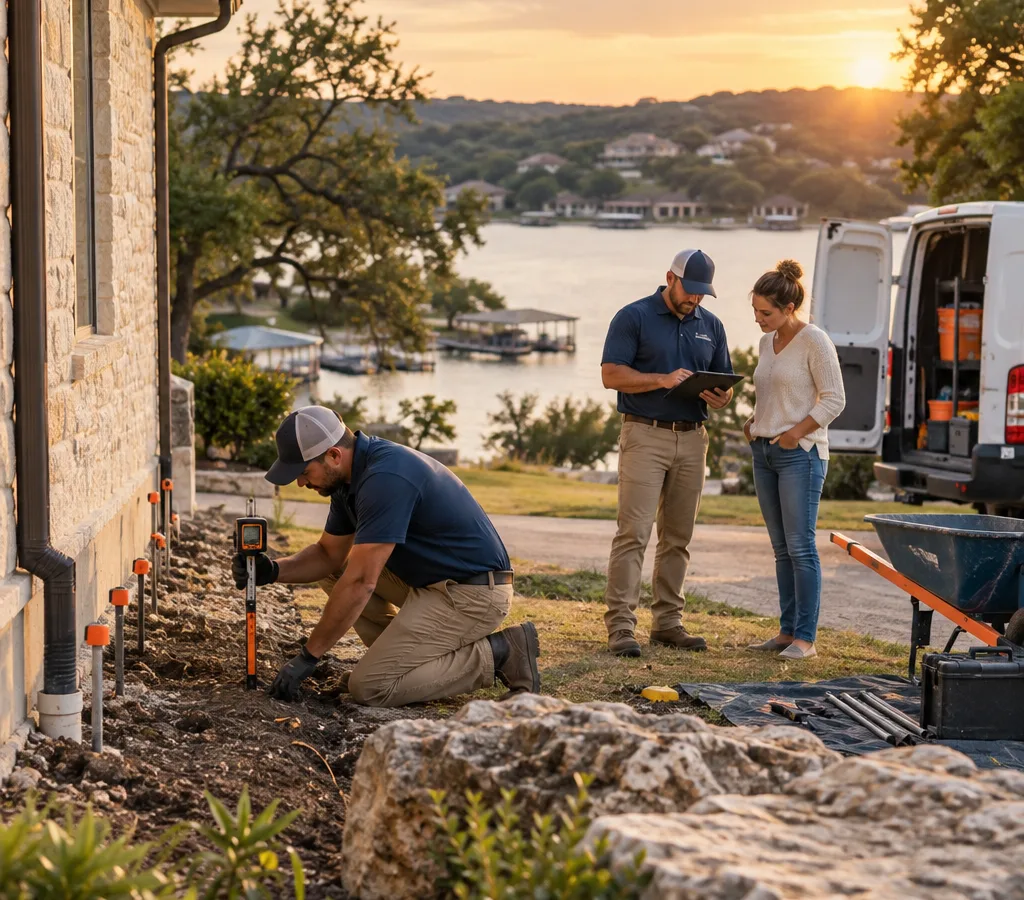
Most homes in the city sit on a concrete slab, and most slab problems start at the edges. Clay under the perimeter swells after rain and shrinks in dry months, while the middle of the slab stays steadier. Over time one corner drops, and cracks open in the walls above it.
Slab foundation repair stops that settling by putting support under the low areas. A local contractor checks floor levels, finds the edges that have dropped, and recommends how many piers are needed and where. For the wider picture on repairs across town, see Foundation Repair New Braunfels Texas.
It also matters what comes after. Piers hold the slab up, but water pooling beside the house keeps working on the clay, so downspouts and grading are part of a good plan.
Slab movement shows up inside and out, usually near one corner or along one side of the house:
More than half the homes here were built after 2000, so many slabs are fairly new. Early cracking in a newer home is often about how the lot drains rather than the concrete itself.
Both work. The right one depends on the soil, the weight of the house and how deep firm ground is.
Stacked concrete cylinders hydraulically pressed into the ground under the slab until they stop moving. They are common on clay-soil homes across Central Texas.
Steel pipe driven down to deeper load-bearing soil or rock using the weight of the house. They suit heavier homes or sites where firm ground sits deep.
Steel shafts with screw-like plates turned into the ground. They work well for lighter areas like porches and additions, and where vibration has to stay low.
When the middle of the slab has dropped, crews may need to tunnel under the house or cut through the floor to reach it. That adds cost, so ask whether it is needed.
Once piers are set, the slab can be lifted back toward level. Full level is not always possible without causing new cracks, so expect a target, not perfection.
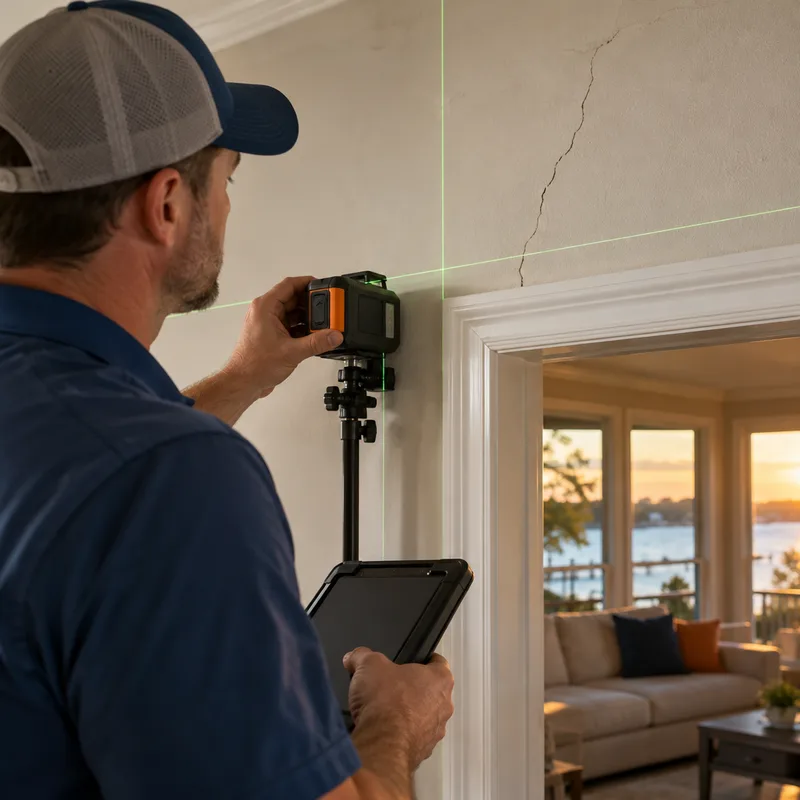
Readings across the whole slab show where it has dropped and by how much.
The contractor marks where piers go, usually along the low edges and at the corners.
Holes are dug beside or under the slab and piers are driven to resistance.
The slab is raised where possible, then holes are filled and the soil is compacted.
A second set of readings shows how much the slab came up and gives you a baseline for later.
Most foundation repairs on slab homes here typically cost about $4,500 to $10,500. The total depends mostly on how many piers are needed and whether any have to go under the interior of the house.
A few exterior piers at one corner sit at the low end. Tunneling, interior piers, plumbing repairs under the slab and drainage work push the price up. Ask for a written plan that shows the number and location of every pier so bids can be compared fairly.
Repair makes sense when cracks keep growing, doors stop closing, or floor readings show the slab is still moving. Waiting usually means more piers later, because more of the slab settles.
If the cracks are small and stable, fixing drainage and watering the soil evenly in dry months may be enough for now. Marking crack ends with a pencil and a date makes it easy to see if they grow.
Hold off on new flooring or major drywall work until the slab is stable. Fresh finishes hide the pattern the contractor needs to see.
Call to describe the cracks and doors you are seeing. A local contractor in New Braunfels, Texas can explain whether piers, drainage work or both make sense.