
Re-shimming
Replacing crushed wood shims with steel or composite shims to bring beams back up. It is often the simplest fix when the piers themselves are sound.
Bouncy, sloping or creaking floors? Get the piers, beams and sills under your raised home checked and brought back into line.
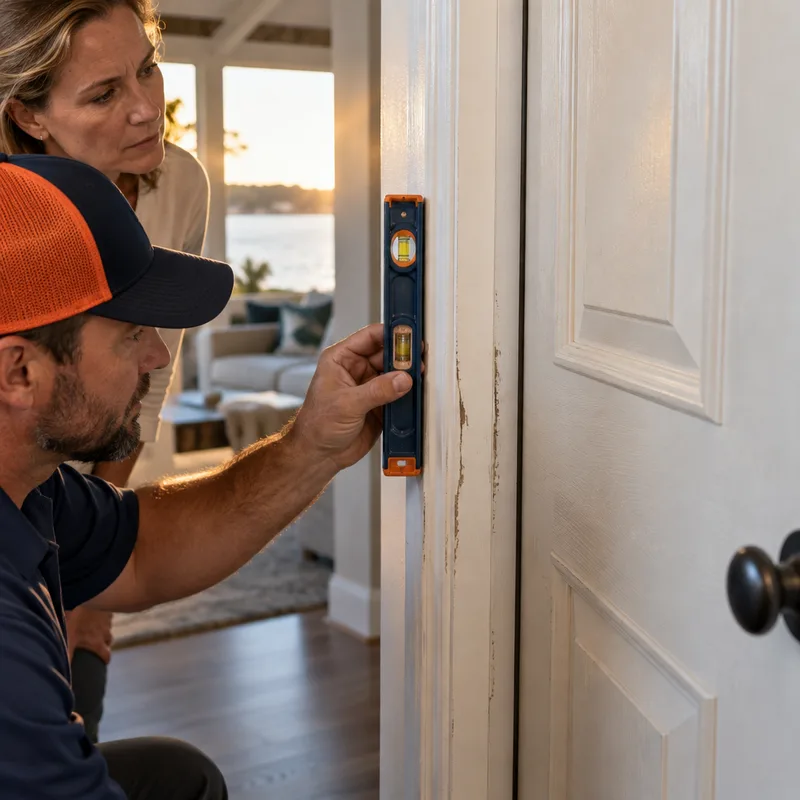
A pier and beam foundation holds the house on beams that rest on concrete or wood piers, with a crawl space underneath. When a pier settles, a shim crushes or a sill rots, the floor above it drops. You feel it as a slope, a soft spot or a door that drags.
Raised homes are more common in the older parts of town. About 13% of homes in the city were built before 1970, and those are the houses most likely to have original piers, wood shims and sills that have taken decades of moisture. For other repair types, see foundation repair in New Braunfels.
The good news is that pier-and-beam repairs are usually more adjustable than slab work. Crews can reach almost everything from the crawl space, so many problems can be fixed by re-shimming, adding piers or replacing the damaged wood.
Most pier-and-beam problems come down to support, wood or water:
A crawl space check should cover every pier, the condition of the wood and where water gets in. Bring up any past plumbing leaks too, since they often explain a single soft spot.

The fix depends on whether the problem is support, damaged wood or simply too few piers.
Replacing crushed wood shims with steel or composite shims to bring beams back up. It is often the simplest fix when the piers themselves are sound.
New piers under long spans cut the distance between supports so joists stop sagging in the middle of the room.
Rotted sections are cut out and replaced or sistered with new lumber. Treated wood resists moisture better near the ground.
Once support is fixed, the floor can be raised in stages. Going slowly helps limit new cracks in plaster, drywall and trim.
Better ventilation, a vapor barrier and drainage away from the crawl space help keep new wood and shims from failing again.
The contractor checks each pier, shim, beam and sill, and notes standing water or damp wood.
Readings across the rooms above show which areas have dropped and by how much.
You get the list of piers to add, shims to replace and wood to repair, with the order of the work.
Crews fix the support, then raise the floor gradually to the target level.
House leveling and pier-and-beam repairs here typically cost about $4,900 to $9,300. A simple re-shim sits near the low end, while new piers throughout the house or large sill and beam replacements cost more.
Access matters too. A low or wet crawl space slows the work, and replacing rotted wood near the exterior walls takes longer than adding piers in the middle. Ask for a plan that lists each repair so you can see where the money goes.
Floors that slope enough to roll a marble, soft spots that give underfoot, and doors that stick in one part of the house are all good reasons to have the crawl space checked.
Seasonal squeaks and small gaps that open and close with the weather are normal for a raised home. What matters is a trend: dips that get deeper or spread to new rooms.
If you are buying an older home in town, a crawl space check before closing can show whether you are looking at a quick re-shim or a larger repair.
Call to describe the slopes, soft spots or sticking doors you are noticing. A local contractor in New Braunfels, Texas can explain what the crawl space likely needs.